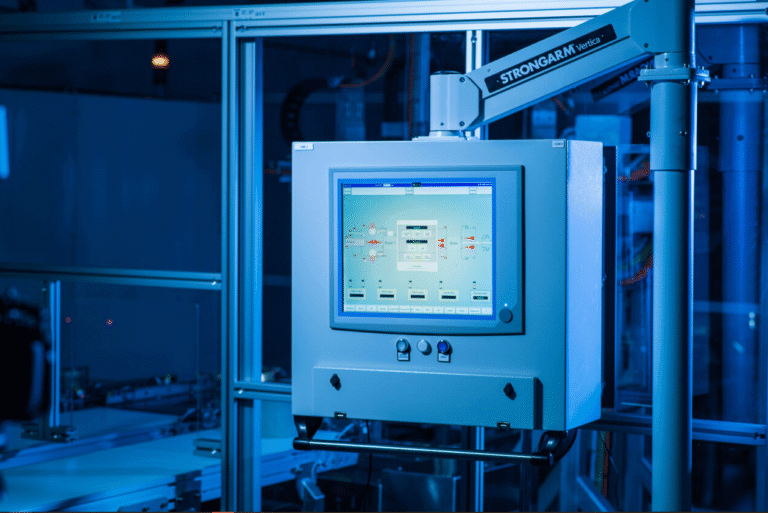
Manufacturing is becoming more automated and more digital, especially in larger corporations. In that shift, the Manufacturing Execution System (MES) has become a core system for shop-floor execution: software that monitors, tracks, documents, and controls production in real time. In highly automated operations, the value is obvious. Machines generate more events and data than any team can track reliably by hand, and MES turns that stream into controlled execution and usable records.
What is less obvious is that MES is not “only for high automation”. Manual and semi-automated production still depends on critical information, such as quality checks, operator actions, material movements, downtime reasons, and process parameters. When this information lives in paper forms, spreadsheets, or memory, errors and inconsistencies accumulate, and decisions arrive late. A well-scoped MES can standardise how work is executed, capture data once at the source, and make performance and traceability visible, even when the line is not fully automated.
Manual production: digitise the work that already happens
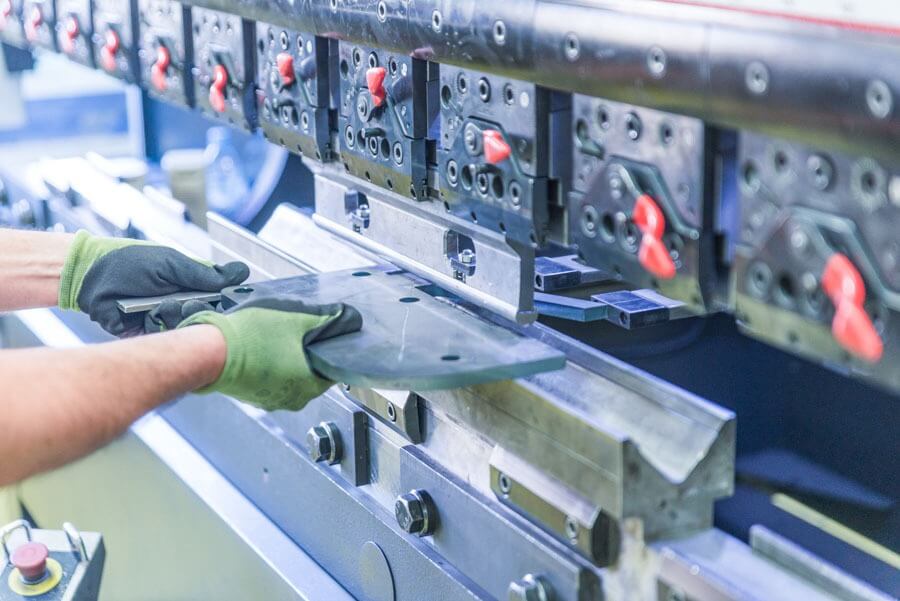
Manual production does not need automation to benefit from MES. MES digitises and standardises operator logs, tracks work-in-progress, and monitors throughput or downtime in real time.
Instead of paper forms for finished quantity or machine settings, MES captures data directly via operator tablets or smart devices. This removes copying errors, speeds up reporting, and strengthens traceability by tracking materials and components from receipt to final assembly.
Compared to paper-based tracking, the difference is structural, not incremental.
| Activity | Paper / spreadsheets | MES |
|---|---|---|
| Operator logs | Free-text, inconsistent | Structured, standardised entries |
| Data errors | Copying and transcription | Single entry at source |
| WIP visibility | Manual counts, delayed | WIP tracking from station events (near real time) |
| Downtime tracking | After-the-fact estimates | Timestamped events from operator input (near real time) |
| Traceability | Often incomplete | Receipt-to-assembly linkage |
Semi-automated production: connect people and PLC-controlled equipment
In semi-automated production, MES bridges operators and PLC-controlled equipment, collects sensor data, enforces work instructions, and manages quality checks.
A common pattern is step gating, where MES explicitly authorises the next process step. When an operator completes a manual action, MES validates the input, triggers the next machine process, records the event, and verifies compliance with production rules.
Fully automated production: execution hub and traceability backbone
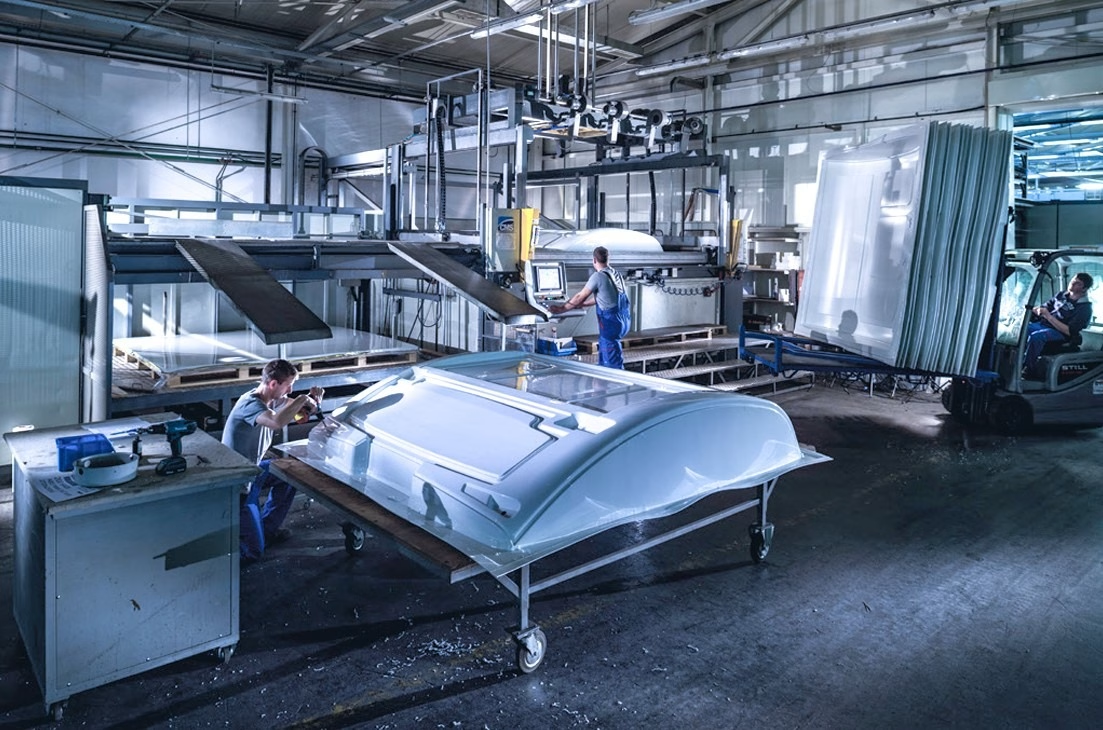
In fully automated production, MES becomes the integration hub for robots, conveyors, PLCs, SCADA, and IIoT devices. It supports predictive maintenance, adaptive scheduling, energy optimisation, and end-to-end traceability.
For example, when an automated cell reports a deviation, MES can halt execution, apply corrected parameters, enforce a quality recheck, and record the event to genealogy.
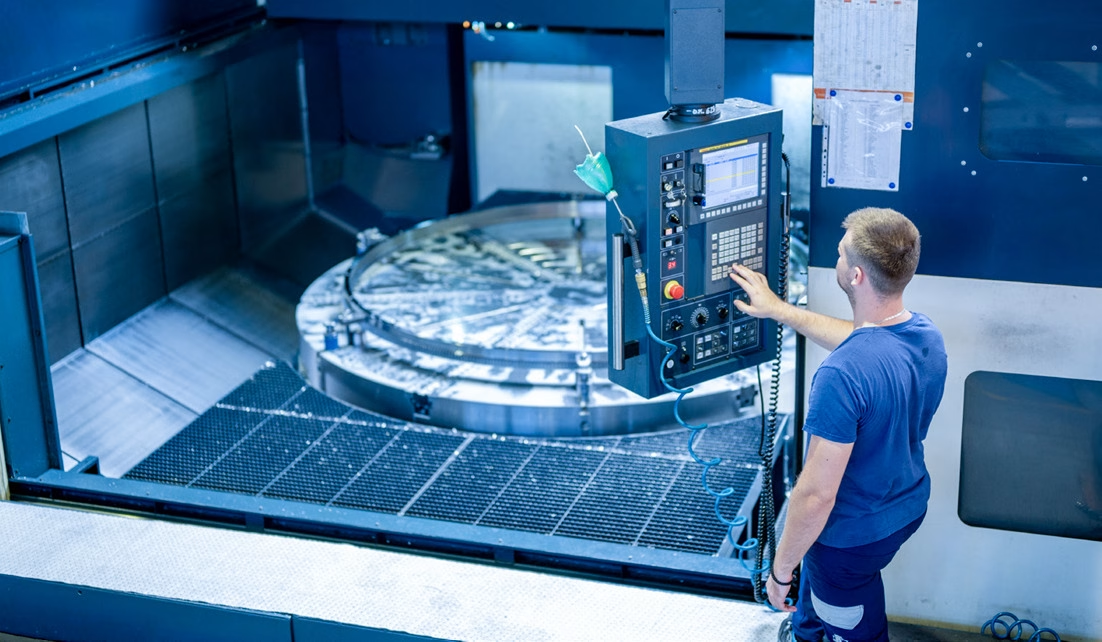
Automation level vs MES integration focus
The scope and role of MES shift with the level of automation, but its function remains consistent.
| Automation level | Typical integrations | MES focus |
|---|---|---|
| Manual | ERP, basic quality records | Standard work, data capture, traceability |
| Semi-automated | PLCs, sensors, test stations | Step enforcement, rule checks, event logging |
| Fully automated | SCADA, robots, conveyors, IIoT | Automated deviation handling, genealogy, optimisation inputs |
Why automation amplifies MES value
The impact of MES on outcomes grows with automation. Connected assets generate higher-resolution data and tighter feedback loops. Predictive maintenance becomes more precise. Scheduling reacts to real capacity, not estimates. Constraint control improves, and energy and material usage become measurable at finer granularity.
Manual operations still gain substantial value. MES keeps work instructions under version control, records data at the station, makes deviations visible in real time, and completes traceability without paper trails.
MES for small, medium, and large manufacturers
Medium-sized and large manufacturers operate a wider mix of machines and processes. MES integrates across resources, coordinates execution, and supports complex operations. Beyond a certain scale and variability, running production without MES becomes impractical.
For smaller shop floors, the benefits can seem less obvious, which leads many to assume MES is not worth the investment. In practice, scoped and modular MES implementations exist that focus on core execution, data capture, and traceability. These approaches improve visibility, reduce errors, and support data-driven decisions without the overhead of a full-scale enterprise rollout.
To learn how to fit MES to your specific automation level, constraints, and production reality, read the whitepaper and use it as a guide for defining the right scope and rollout approach.